
Introduction
HE SANG, HE NODDED… AND HISTORY CLOSED THE DOOR WITHOUT A SOUND
There are moments in music that arrive quietly—so quietly, in fact, that we don't recognize their weight until they have already passed. No grand announcement. No final bow. Just a voice, a song, and a stage that suddenly becomes something more than a place to perform.
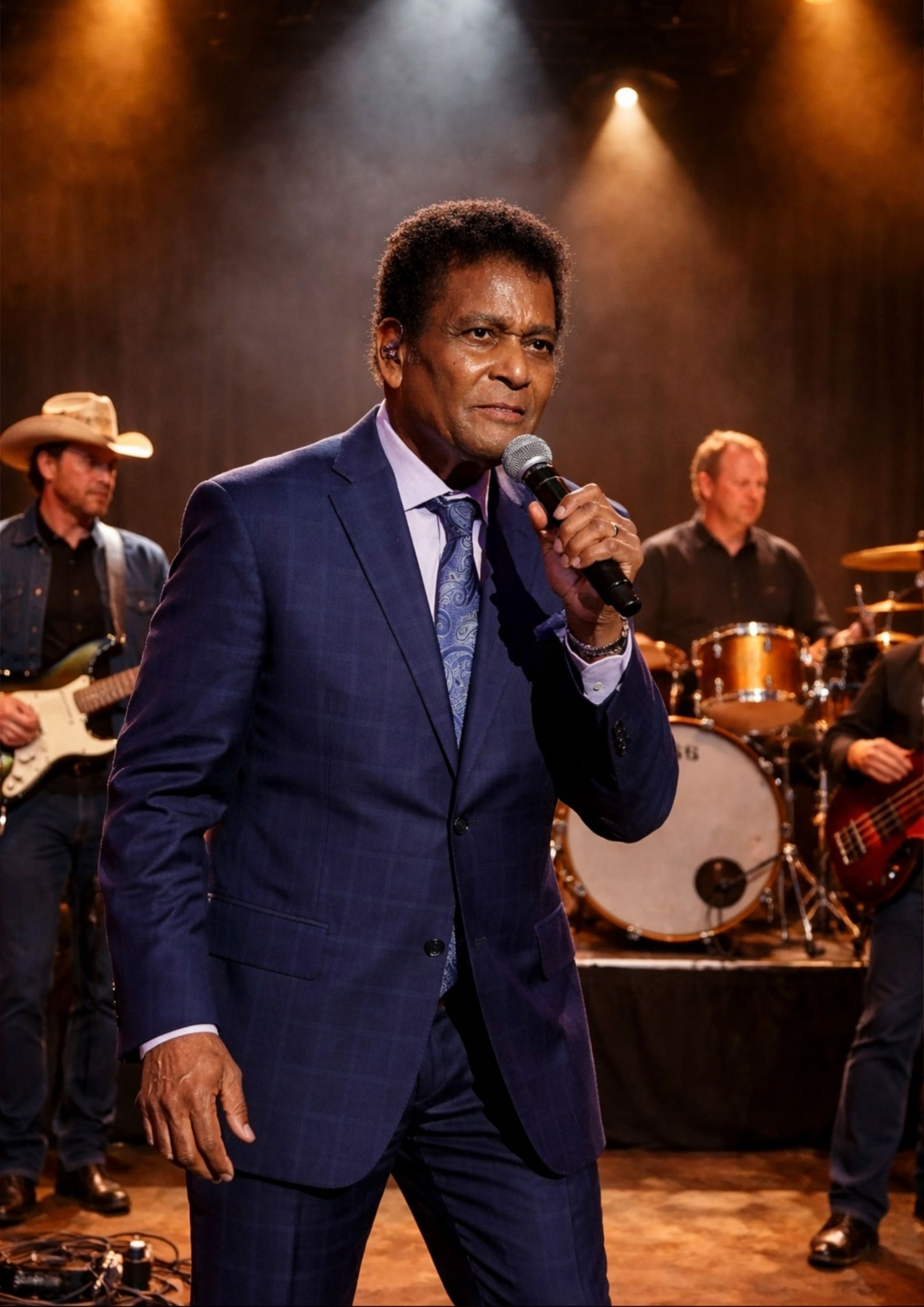
On December 12, 2020, Charley Pride walked onto the stage of the Grand Ole Opry as he had done so many times before. For decades, that stage had been a home to him—a place where his voice helped shape the sound of country music and where audiences came not only to hear songs, but to feel something lasting.
There was no sign that night would be different.
No farewell tour.
No emotional speeches.
No hint that history was quietly preparing to turn a page.
The lights came up. The familiar presence stepped forward. And then, with the same calm dignity that had defined his entire career, Charley Pride began to sing.
"Kiss an Angel Good Mornin'."
For those who knew the song, it was more than a hit. It was a piece of life—one of those melodies that had followed people through years of love, routine, and memory. Weddings, Sunday mornings, long drives across quiet highways… the song had lived in all of those places.
That night, it returned once more.
His voice was not as strong as it had been in earlier years. Time, as it always does, had softened its edges. But what remained was something deeper than strength—presence. A steady, grounded presence that did not demand attention, but naturally held it.
He didn't rush.
He didn't overreach.
He simply sang.
And for those few minutes, nothing else seemed to matter.
The audience listened, perhaps with the quiet appreciation reserved for a familiar voice that has traveled with them through life. There was no sense of urgency. No awareness that this moment was different from any other performance he had given.
Because Charley Pride did not make it different.
When the final note faded, he didn't pause for dramatic effect. He didn't speak. He didn't try to capture the moment or hold onto it.
He nodded.
A simple, understated gesture.
And then he walked off the stage.
No one in the audience knew what had just happened.
They clapped, as they always had. They smiled. They carried the memory of the performance with them, unaware that they had just witnessed something that would soon feel far more significant than applause.
Hours later, the world changed.
News spread across Nashville, and then far beyond it. Charley Pride had passed away due to complications from COVID-19. The man who had stood on that stage only hours before was gone.
And suddenly, that quiet performance became something else entirely.
It was no longer just a song.
It was a farewell.
Not one that had been announced. Not one that had been planned for headlines or history books. But one that had happened in real time, in front of an audience that did not yet understand what they were seeing.
And perhaps that is what makes it so powerful.
In an era where goodbyes are often carefully orchestrated—extended tours, emotional speeches, final curtain calls—Charley Pride chose something different. Or perhaps, more truthfully, he simply remained who he had always been.
He did not need a spotlight to tell the world he was leaving.
He let the music speak.
Throughout his life, Charley Pride carried himself with a quiet strength that set him apart. As one of the first Black superstars in country music, his journey was never simple. He walked into spaces where he was not always expected, not always welcomed—but he did so with grace, dignity, and an unwavering commitment to his craft.
He didn't argue his place in history.
He earned it.
And on that December night, he left the same way he had lived—without spectacle, without noise, without needing to prove anything at all.
There is something deeply human in that kind of departure.
Because life rarely gives us the chance to announce our final moments. There is no script, no guarantee of a perfect goodbye. More often, the most important endings happen quietly—wrapped in ordinary moments we only recognize in hindsight.
A song.
A smile.
A nod.
And then, silence.
For those who were there that night at the Grand Ole Opry, the memory has taken on a different meaning with time. What once felt like a familiar performance now carries the weight of something final, something unrepeatable.
They were there.
They heard it.
They just didn't know.
And maybe that is the question that lingers long after the music fades:
What if the most important goodbye in country music history wasn't announced at all?
What if it happened in the middle of an ordinary night… while the audience sat quietly, listening, unaware that they were witnessing the closing note of a life that had given them so much?
Charley Pride didn't come back to that stage.
But in a way, he never really left.
Because some voices don't disappear.
They settle into memory.
They echo through time.
They live on—not in grand finales, but in quiet moments that stay with us long after the lights go down.
And sometimes, the most powerful farewell…
is the one that never needed to be said.