
Introduction
AT 3:07 A.M., THE SILENCE BROKE: Dolly Parton and Reba McEntire Speak Without a Script—and the Message Still Echoes
There are moments in public life that feel rehearsed—carefully shaped, timed, and delivered with precision. And then there are moments that arrive without warning, stripped of performance, carrying a weight that cannot be softened.
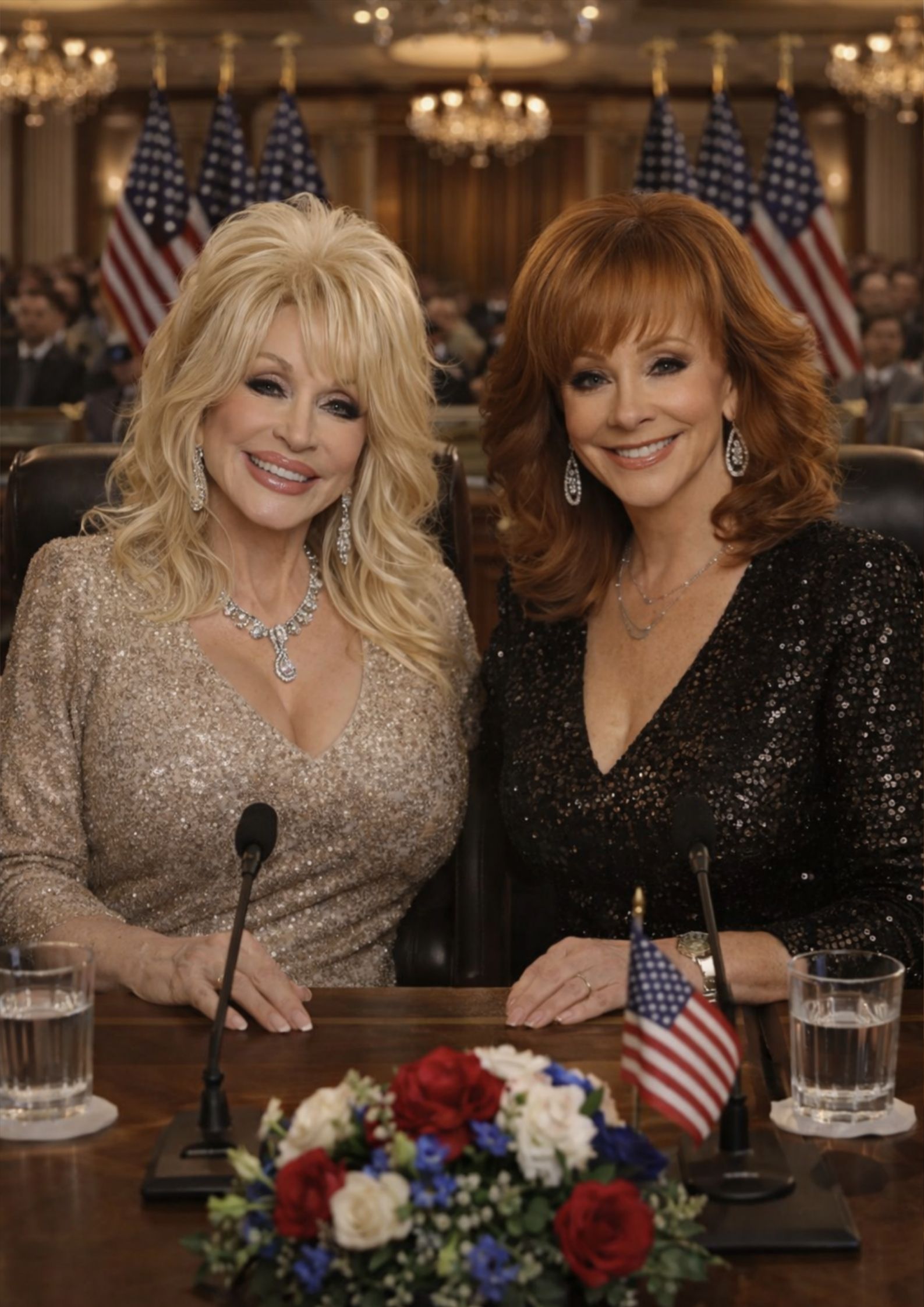
At 3:07 a.m., in a quiet room with no stage lights and no audience, Dolly Parton and Reba McEntire chose the latter.
They did not wait for a statement to be written. They did not consult a team. They did not adjust the lighting or prepare their words. Instead, they went live—unfiltered, unpolished, and unmistakably serious.
What unfolded in those few minutes was not entertainment. It was something closer to testimony.
Dressed casually, speaking in steady tones, the two women addressed their audience not as performers, but as individuals carrying something they felt could not be delayed. Dolly began with a sentence that would immediately shift the atmosphere: "Tonight, at 1:44 a.m., we received a message."
It was brief. Direct. And, as they described it, deeply unsettling.
The message, reportedly sent from an account connected to someone with influence, was not long or elaborate. It did not need to be. Its meaning rested in implication: a warning that continuing to speak on certain matters might come with consequences—and that those in positions of power might choose not to stand beside them.
Reba did not soften her interpretation.
"That wasn't criticism," she said quietly. "That was a threat."
There was no raised voice. No dramatic pause. Just clarity.
And in that calm delivery, the weight of the moment became unmistakable.
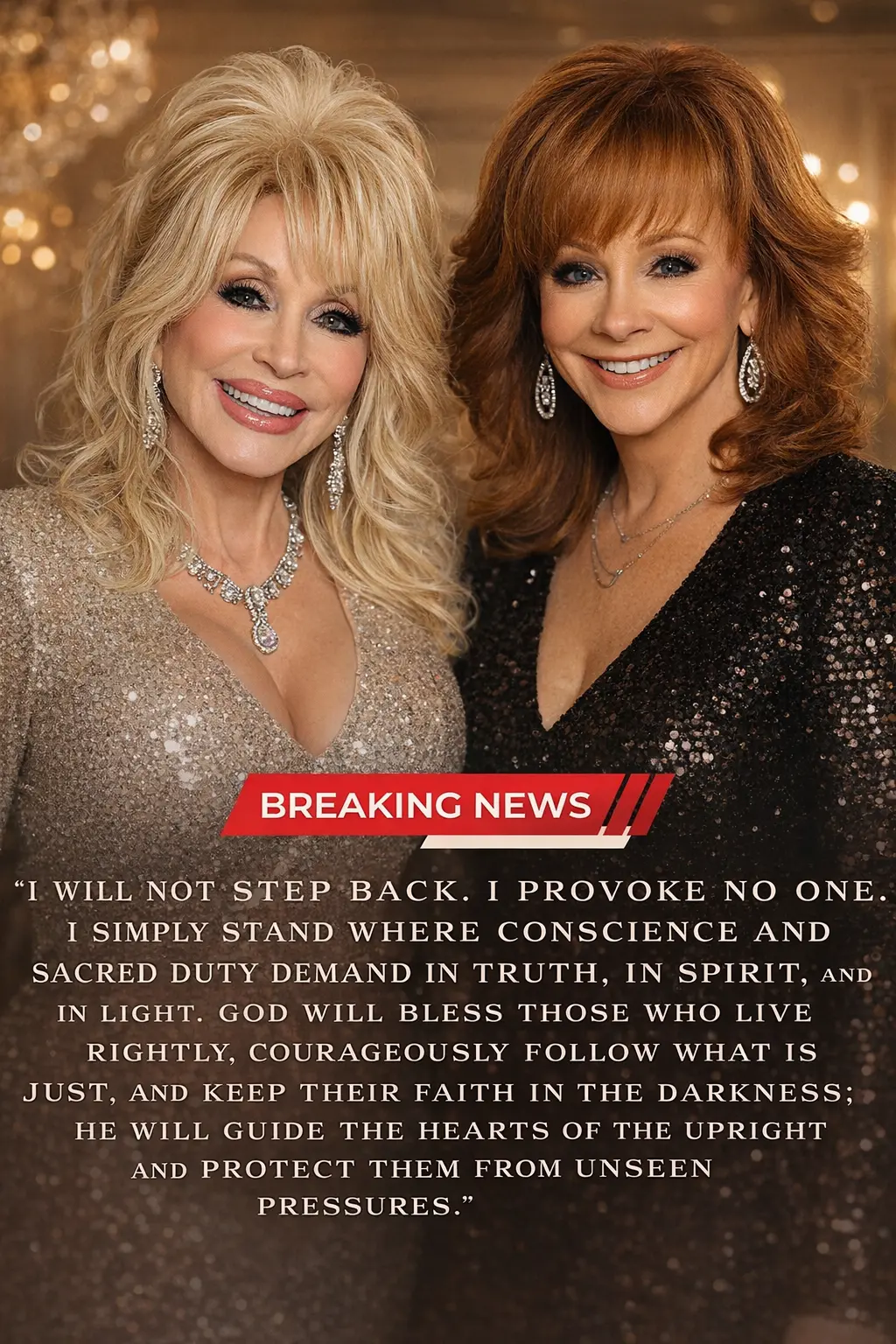
Throughout the livestream, both women spoke about a reality that is rarely discussed openly—the quiet pressure placed on public figures to remain within invisible boundaries. To stay agreeable. To avoid discomfort. To keep conversations within the safe, expected limits of entertainment.
They spoke of being told, at various points in their careers, to "stay in their lane." To focus on music. To leave certain topics untouched.
It was not new, they admitted.
But something about this moment felt different.
"We've been reminded that honesty comes with consequences," Dolly said, her voice measured but firm. "You're allowed to speak—until what you say starts to matter."
For many watching—particularly those who have followed these artists for decades—there was something profoundly striking in that statement. It was not political. It was not confrontational. It was reflective. A recognition of a tension that exists not just in music, but across public life: the balance between visibility and vulnerability.
Reba, sitting beside her, added quietly, "Tonight someone decided to draw a line."
And that, perhaps, was why they chose to speak when they did.
Not later. Not after careful consideration.
But in the middle of the night, when the world is quieter—and truth feels harder to delay.
They made it clear that the decision to go live was intentional. There would be no intermediaries. No edits. No reinterpretation.
"No script. No middlemen. No filters," Reba said.
In an era where messages are often shaped before they are shared, that choice alone carried meaning.
As the conversation continued, the tone remained steady, but the implications grew heavier. They spoke not only about the message itself, but about responsibility—the kind that comes with influence.
Not as performance.
But as obligation.
They reflected on the idea that silence, when encouraged or imposed, can begin to resemble agreement. That intimidation does not always arrive loudly—it can come quietly, carefully worded, wrapped in politeness but carrying unmistakable intent.
And then came one of the most haunting moments of the stream.
Dolly, holding the phone, acknowledged something few public figures would say out loud: that there could be consequences for what they were doing.
"If from this moment forward our voices, our work, or our presence start to disappear," she said, "people will know it didn't happen by accident."
There was no elaboration. No explanation.
Just a statement, left to settle.
As she spoke, the phone buzzed. Once. Then again.
She turned it face down.
Neither of them looked at it again.
What followed was not defiance in the traditional sense. There was no anger, no call to confrontation. Instead, there was something quieter—and perhaps more powerful.
Resolve.
"We're not stepping back," Reba said. "We're not looking for a fight. We're just standing where we believe we should—honest, present, and unafraid."
For longtime listeners, for those who have grown up with their music, this moment carried a different kind of significance. It was not about celebrity. It was about character.
Because over the years, both Dolly Parton and Reba McEntire have built reputations not only as artists, but as individuals defined by integrity, humility, and a deep connection to their audiences. They have never relied on controversy to remain relevant. They have never needed to raise their voices to be heard.
And yet, in this moment, they chose to speak.
Not loudly.
But clearly.
The livestream ended as simply as it began.
No music. No closing remarks prepared in advance.
Just one final sentence, delivered without emphasis, but impossible to ignore:
"See you tomorrow. Or maybe not. That part isn't up to us."
The screen went dark.
The room fell silent.
And somewhere, just out of view, a phone continued to vibrate.
In the hours that followed, conversations began to unfold—not just about what had been said, but about what it represented. About influence. About expression. About the unseen pressures that shape what is spoken—and what is left unsaid.
For many, especially those who have followed these artists across decades, the moment felt less like an interruption—and more like a reminder.
That behind the music, behind the legacy, behind the carefully curated image of public life, there are still human beings navigating difficult choices.
And sometimes, in the quietest hours of the night, those choices find their voice.
Not in performance.
But in truth.
And once spoken, that truth does not disappear.
It lingers.
Much like the echo of a song—long after the final note has faded.